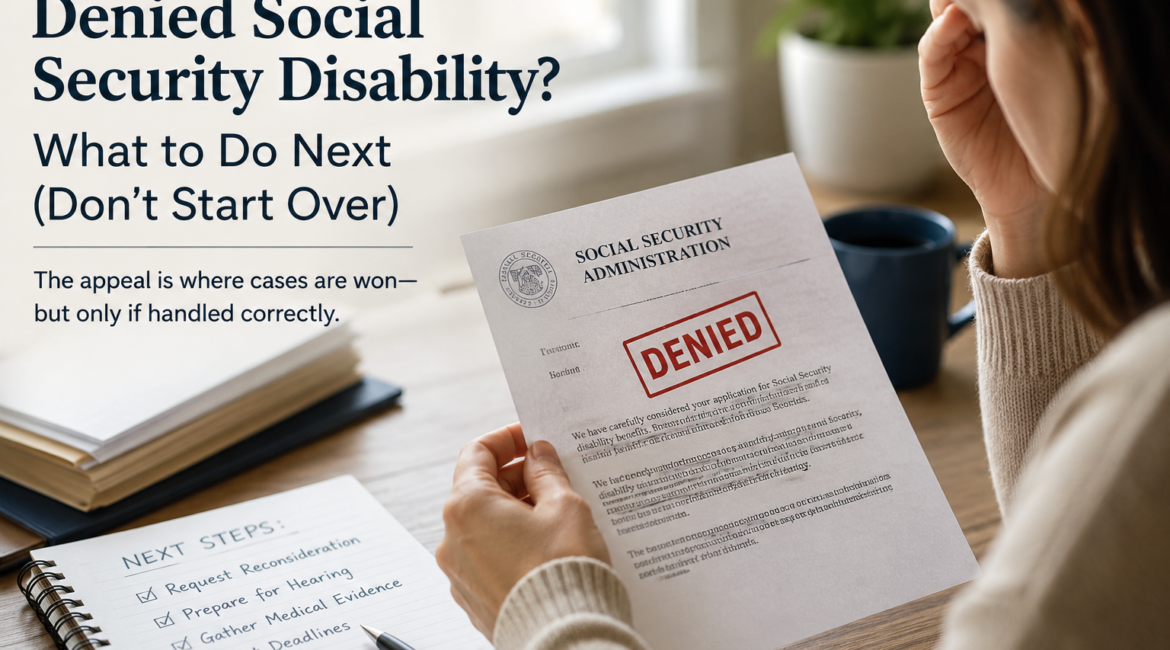
Denied Social Security Disability? Here’s What to Do Next—and Why Starting Over Is Usually a Mistake
Receiving a denial letter from the Social Security Administration (SSA) can feel devastating.
You’ve filled out the paperwork, gathered medical records, waited months for a decision—and then you’re told your claim has been denied.
If this has happened to you, here’s the most important thing to know:
A denial does not necessarily mean you don’t qualify for benefits.
In fact, many deserving applicants are denied on their first application. The key is knowing what to do next—and acting quickly.
At Hoffman, Larin & Agnetti, we’ve helped clients throughout South Florida navigate the Social Security Disability appeals process, and we’ve seen firsthand that many successful claims are won on appeal.
Why Are So Many Initial SSDI Claims Denied?
Many people assume a denial means Social Security believes they aren’t disabled. Often, that’s not the case.
Initial claims are frequently denied because:
- Medical records don’t fully document how the condition limits the person’s ability to work.
- Important evidence is missing.
- The application doesn’t clearly explain the claimant’s functional limitations.
- The SSA believes the applicant can perform other types of work.
- There are inconsistencies between medical records and statements made on the application.
One of the biggest misconceptions is that simply having a serious medical condition qualifies someone for disability benefits.
It doesn’t.
The SSA must determine that your medical condition prevents you from performing substantial gainful activity—essentially, that you cannot maintain full-time work because of your impairments.
That’s a legal standard, not simply a medical diagnosis.
Don’t Make the Biggest Mistake: Filing a Brand-New Application
After receiving a denial, some people immediately file a new application.
In many cases, that’s the wrong move.
If your claim was denied, you generally have the right to appeal that decision. Starting over often means:
- Losing valuable time.
- Delaying your case by months.
- Potentially reducing the amount of past-due benefits you may receive if your claim is eventually approved.
Unless there is a specific legal reason to file a new application, preserving your appeal rights is often the better course of action.
Don’t Miss the Appeal Deadline
One of the biggest mistakes people make after receiving a denial is waiting too long to act.
In most cases, you have 60 days from the date you receive your denial notice to file an appeal.
Missing that deadline can have serious consequences.
You may lose your right to appeal and be forced to restart the application process, potentially delaying benefits and affecting the amount of back pay you could receive.
If you’ve received a denial letter, don’t put it aside or assume you have plenty of time. The sooner you begin working on your appeal, the more opportunity you have to strengthen your case.
Why Legal Representation Matters Even More During an Appeal
Many people apply for Social Security Disability on their own and only seek legal help after receiving a denial.
That’s understandable—but the appeal is often where experienced representation can make the biggest difference.
One of the most valuable things an experienced disability attorney and staff bring to your case is an understanding of how the Social Security Administration evaluates disability claims.
The SSA isn’t simply looking for a list of medical diagnoses. It is looking for evidence that your medical condition prevents you from performing work-related activities on a full-time, sustained basis.
That means how your limitations are described matters.
For example, writing: “I have back problems.”
doesn’t tell the SSA how your condition affects your ability to work.
A much stronger description would be: “Because of my back condition, I cannot sit at a desk for more than 30 minutes at a time without severe pain. I need to change positions frequently and often have to lie down during the day to relieve my symptoms, making it impossible to sustain a full-time desk job.”
The first statement simply identifies a diagnosis.
The second explains functional limitations—what you can no longer do because of your medical condition. Those functional limitations are what the SSA considers when deciding whether you meet its definition of disability.
The same principle applies to almost every medical condition.
Someone with anxiety shouldn’t simply write, “I have anxiety.” Instead, they should explain how anxiety causes panic attacks, difficulty concentrating, difficulty completing tasks, or prevents them from interacting appropriately with coworkers or the public.
Someone with arthritis shouldn’t stop at saying their joints hurt. They should explain that they cannot grip objects long enough to type, write, or perform repetitive hand movements throughout the workday.
Someone who suffers from migraines should describe how frequent headaches force them to leave work unexpectedly, lie down in a dark room for hours, or miss work several times each month.
This isn’t about using “magic words” or exaggerating your symptoms. It’s about accurately describing how your condition affects your ability to function in the workplace, because that’s what the SSA is evaluating.
Our attorneys and staff work closely with clients to translate a medical diagnosis into the functional limitations that Social Security seeks. We review disability forms, medical records, and client statements to ensure they clearly explain why a condition prevents full-time employment, not merely that the condition exists.
Just as importantly, we can:
- Review why your claim was denied.
- Identify weaknesses or missing evidence.
- Obtain updated medical records.
- Work with your treating providers to better document your limitations.
- Ensure your disability forms consistently reflect how your impairments affect your ability to work.
- Prepare you for your hearing before an Administrative Law Judge.
- Present your case in a way that clearly demonstrates how your impairments prevent you from maintaining substantial gainful employment.
Many successful appeals aren’t won because someone’s medical condition suddenly became worse.
They’re won because the evidence is stronger, the medical records are more complete, and the claimant’s limitations are presented clearly and consistently.
The Appeal Is Your Opportunity to Build a Stronger Case
One thing we often tell our clients is this:
An appeal isn’t simply asking Social Security to change its mind.
It’s an opportunity to build a stronger case.
That may mean:
- Updating medical records.
- Obtaining additional opinions from treating providers.
- Better documenting how your condition affects your daily activities and ability to work.
- Correcting omissions or inconsistencies in the original application.
- Presenting your limitations in a way that reflects the legal standard the SSA uses to evaluate disability claims.
Many applicants approved on appeal aren’t approved because their condition suddenly worsened.
They’re approved because the evidence more accurately demonstrates why they can no longer maintain full-time employment.
Don’t Give Up After a Denial
Receiving a denial is discouraging, but it doesn’t have to be the end of your claim.
Many people who ultimately receive Social Security Disability benefits are denied on their first application.
The difference is often not the diagnosis—it’s how the evidence is developed and presented.
The appeal is where cases are won—but only if handled correctly.
Speak With an Experienced South Florida SSDI Attorney
If your Social Security Disability claim has been denied, you don’t have to navigate the appeals process alone.
At Hoffman, Larin & Agnetti, we represent clients throughout the State of Florida (and throughout the country), helping them understand why their claims were denied and building stronger cases on appeal.
If you’ve received a denial letter, don’t wait until the deadline is approaching. The sooner you begin preparing your appeal, the more opportunity there is to strengthen your claim.
Contact Hoffman, Larin & Agnetti today to discuss your case and learn about your options.
Call us @ 305-653-5555. Text Us @305-653-1515 Email us at [email protected], or complete the form on this page, and we will contact you.